Chapter 13: Faiths and traditions · Part 8
Buddhism
Seven traditions, from a Japanese American temple in pews to a convert Zen center on cushions and a Taiwanese order's temple kept by its nuns. Each centres on its image or altar (the Buddha, the onaijin altar, the Gohonzon) and expects an incense burner; most expect a shoe rack and discourage the band and the organs. Each keeps its own calendar, and where monks or nuns live at the temple, it needs their quarters and a kitchen.
Buddhist Churches of America its page →
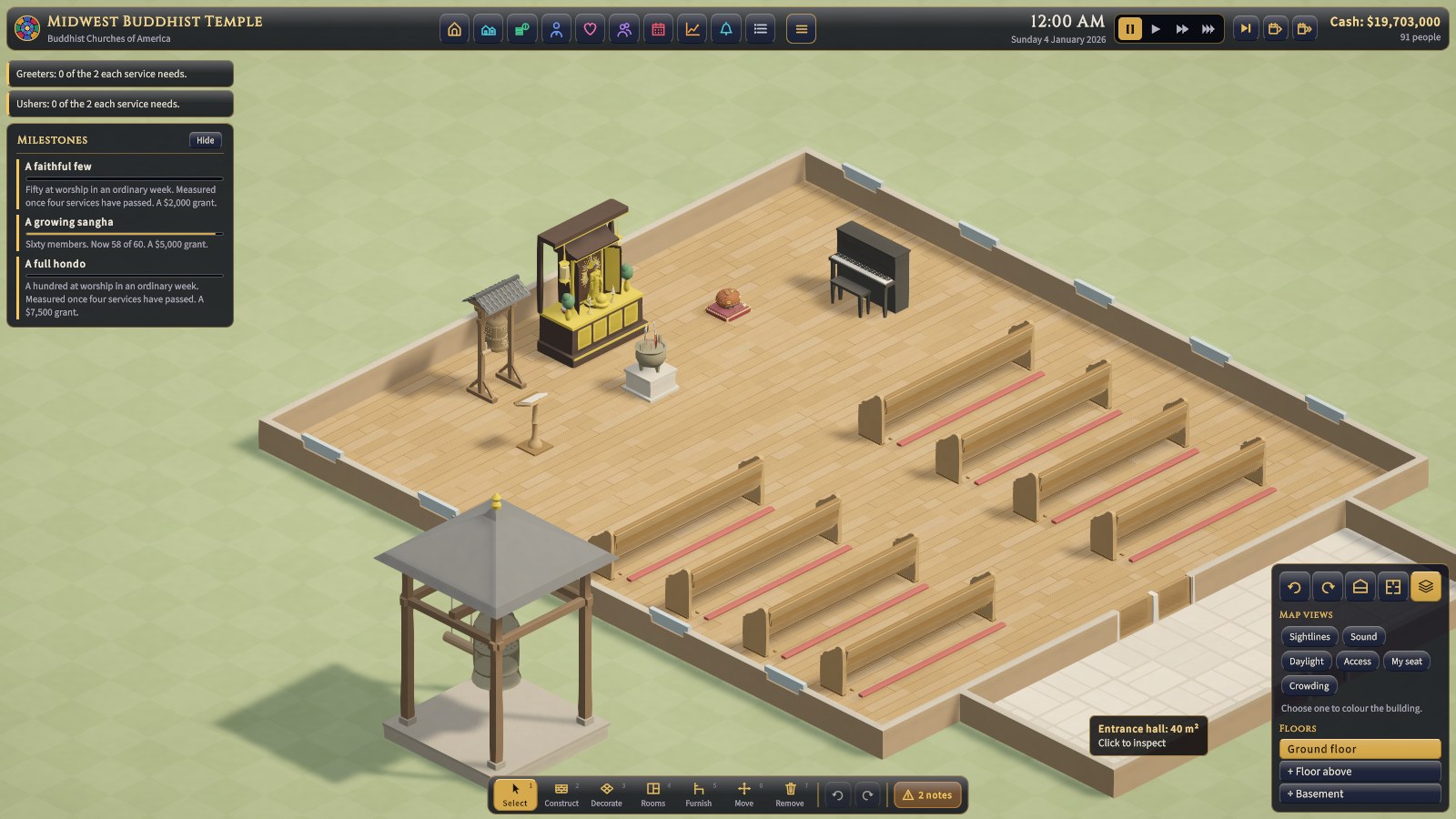
Jodo Shinshu temples, Japanese American and over a century old: a Sunday Shin service in pews before the onaijin altar, sung gathas with a piano, Dharma School, a monthly memorial service, and Obon in summer as the year's peak and its festival fundraiser. The temple bell rings out the old year, 108 times.
- Required: the onaijin altar.
- Expected: the temple bell, an incense burner, a Upright piano.
- Discouraged: drums, the Hammond organ.
- Fits best: pianos and the mokugyo (+1); the onaijin altar, the temple bell, and the incense burner (+0.5); pews, stained glass, and formal items (+0.33); the pipe organ +0.17. Drums and the sound system −0.5, the Hammond organ and handbells −1; chairs and the screen 0.
The BCA's Bishop assigns the minister (Sensei), hearing the board; ministers are scarce and shared between small temples, and the BCA can recall one. The members vote on renovations and new building, and pay dues; the per-member assessment ($120, an estimate) is required, and the BCA's regard rides on it. The minister's assistant leads when the minister is at another temple. Women are ministers, and the temple is affirming. Leaving takes two thirds and costs nothing.
Vietnamese Buddhist temple its page →
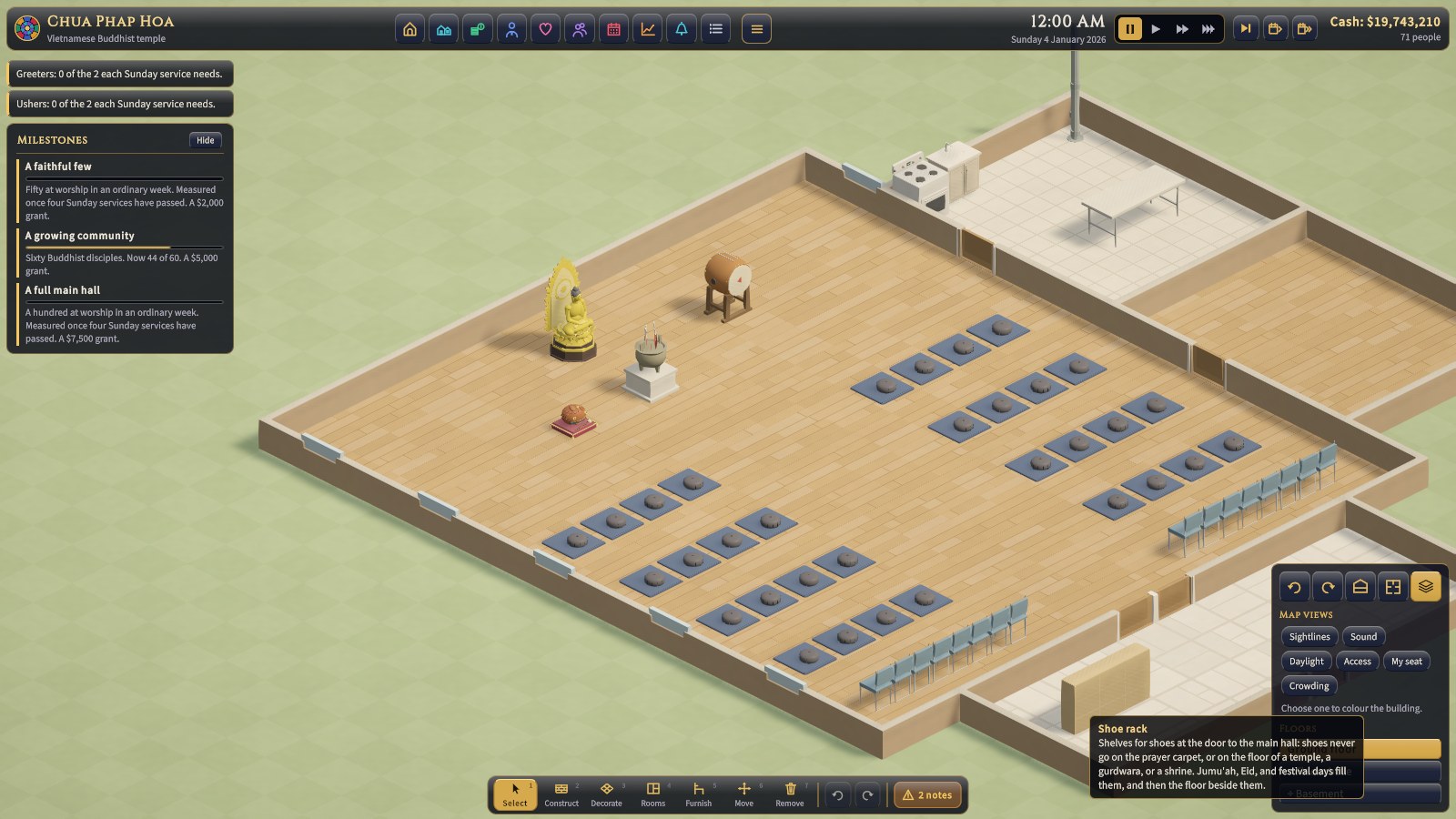
Pure Land devotion with Zen roots: a Sunday chanting service with a vegetarian lunch and a weekly memorial, families sitting on the floor (women on the left, men on the right, elders on chairs), shoes off at the door. Tết and the Buddha's birthday bring the crowds. The lay association variant is run by an elected board that invites its monk.
- Required: a Buddha image, a kitchen, monks' quarters.
- Expected: an incense burner, a shoe rack.
- Discouraged: pianos, organs, drums.
- Fits best: the mokugyo (+1); a Buddha image, the incense burner, and the shoe rack (+0.5); pews, stained glass, and formal items (+0.33). The pipe organ −0.33, drums and the sound system −0.5, pianos, the electronic and Hammond organs, and handbells −1; chairs and the screen 0.
The abbot is a monk or nun, unpaid and celibate, who lives at the temple with resident monastics and stays for life, succeeded by an assistant (a full leader, caring for 150, who costs no salary); monastics are scarce, and giving follows trust in the monk, in private envelopes and boxes. The abbot decides small purchases and building work too, with the temple committee's advice (it only advises), and nothing is owed upward; the federation can withdraw a monk's standing. Leaving takes a majority and costs nothing.
Chinese Buddhist temple its page →
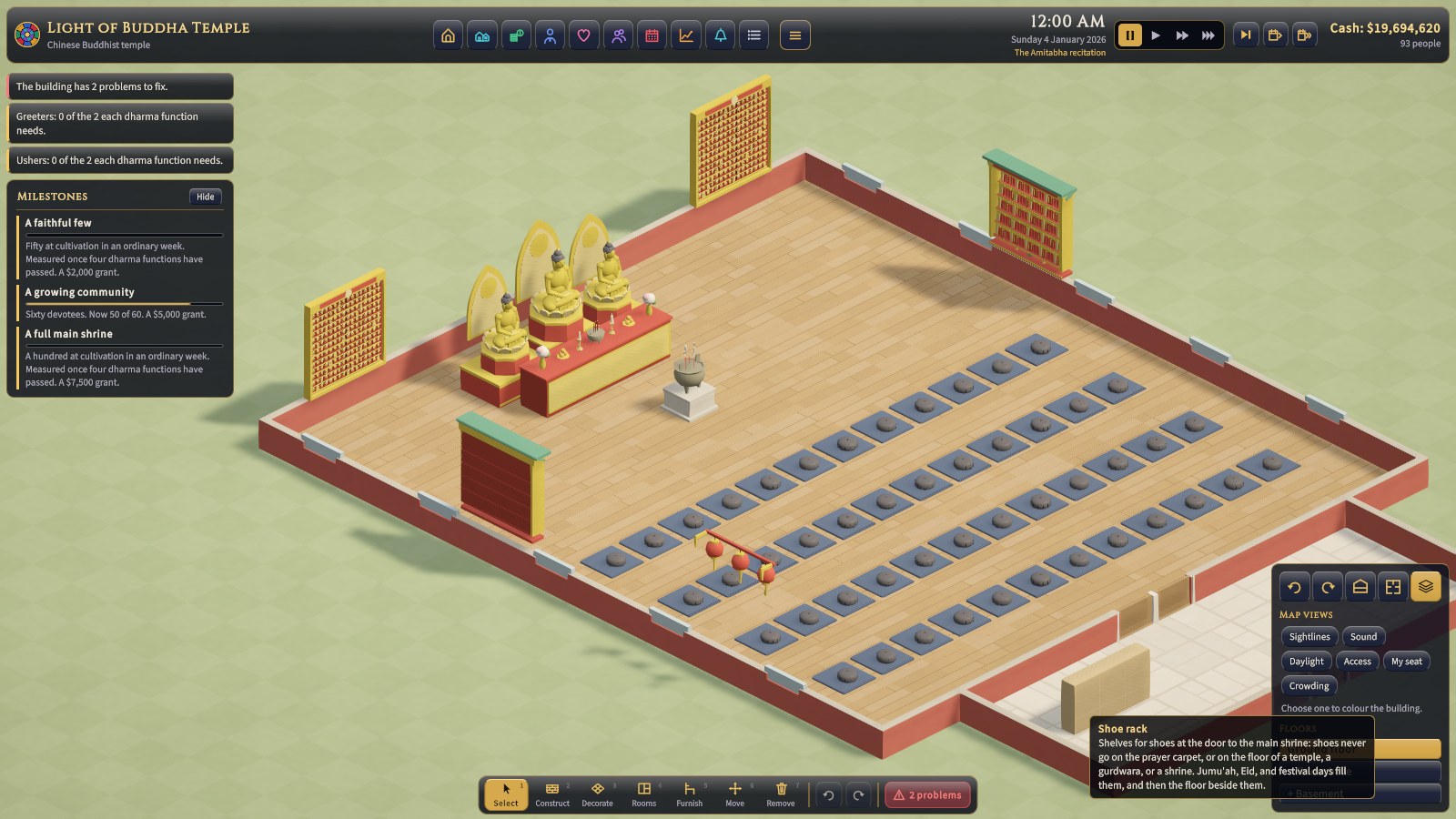
A branch temple of a Taiwanese Buddhist order, written as Fo Guang Shan's: Chinese Mahayana, blending Chan meditation and the recitation of Amitabha's name, taught as Humanistic Buddhism. The mother monastery owns the temple, appoints the abbess, and sends the nuns, who live at the temple and lead every rite; there's no lay board over the clergy. Sunday is the dharma function in the Main Shrine before Shakyamuni, Amitabha, and the Medicine Buddha: the week's sutra, chanted standing to the wooden fish, a dharma talk, and the dedication of merit for the dead, then a vegetarian lunch for everyone, sponsored by families. The temple is open to visitors through the week, and the nuns keep their morning service at half past five. Its income is the dead and the year: memorial tablets, lamps renewed each New Year ($100), and the great rites, Ullambana in the filial month and the Water and Land, a week of chanting that's the year's peak. The variant is a Dharma Drum branch, centred on meditation.
- Required: the three Buddhas, a kitchen, monks' quarters.
- Expected: ancestor tablets, the lamps of brightness, an incense burner. Pianos, organs, and drums are discouraged.
- Fits best: the mokugyo, pews, stained glass, pillars, and every formal item (+1); the three Buddhas, tablets, lamps, and incense burner (+0.5). Chairs, instruments, the sound system, and the screen −1.
The abbess governs, deciding small purchases and renovations, for terms of six years; the monastery decides new building, and can move her, close the temple, or merge it. The nuns are unpaid and celibate, and rise from novice to bhikshuni to senior Dharma master; the abbess leads as a full leader would (caring for 150) at no cost in pay, and whoever the monastery sends is a nun. Disciples who've taken refuge don't vote; a lay advisory committee only advises, and the Buddha's Light association supplies the volunteers. A temple can't vote to leave.
Soka Gakkai International-USA its page →
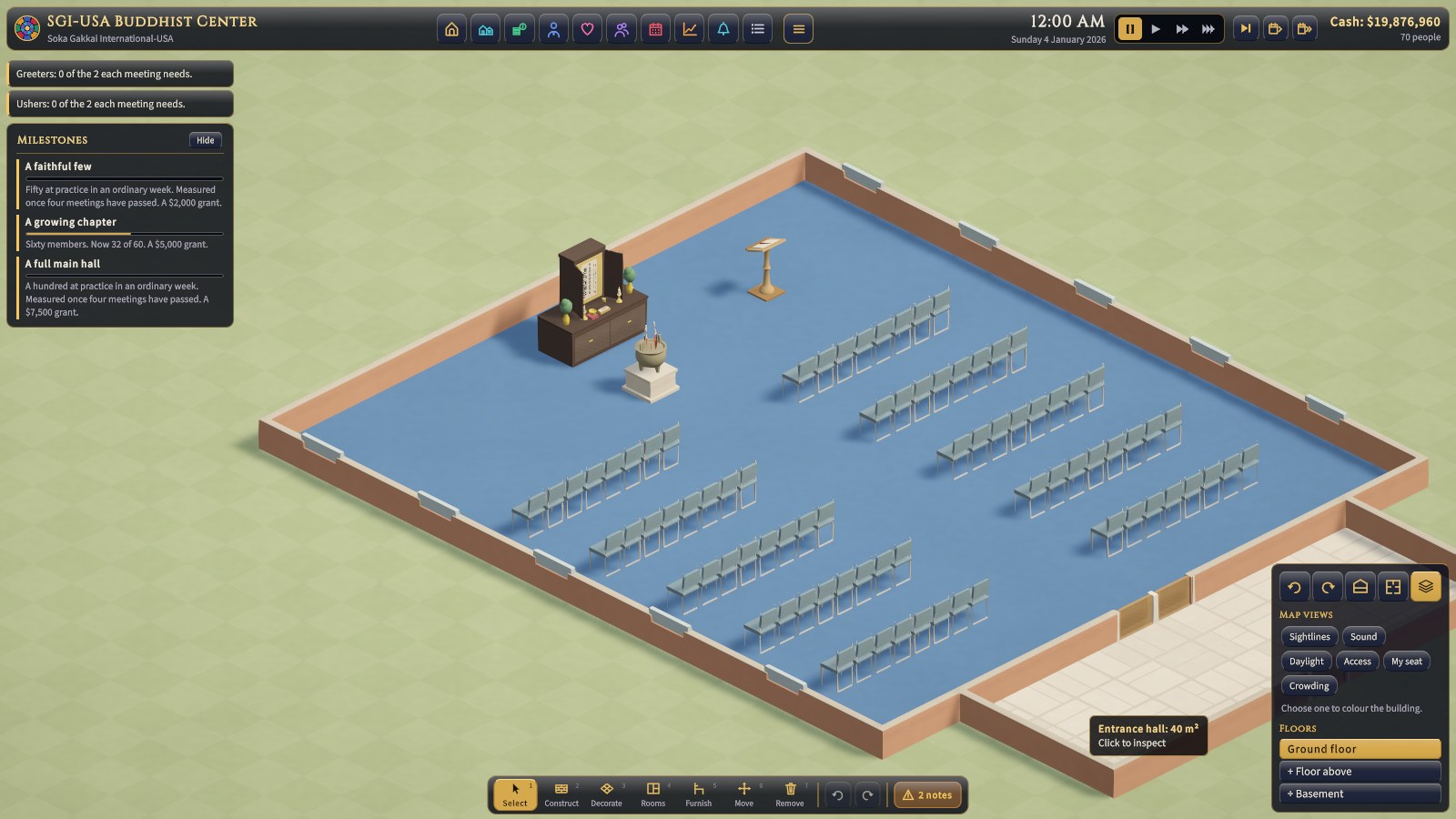
A lay Nichiren Buddhist movement: no clergy, no images, only the Gohonzon, before which members chant. The Sunday gongyo meeting is led by members, the discussion meetings in members' homes are the heart of it, and the centers belong to SGI-USA, which funds them centrally; fundraising is limited to the May Contribution. With no leader to hire, put your money into the building and your people.
- Required: the Gohonzon in its butsudan.
- Expected: an incense burner. The pipe and Hammond organs are discouraged.
- Fits best: the mokugyo (+1); the Gohonzon and incense burner (+0.5); chairs and the projection screen (+0.33), drums and the sound system (+0.17). Pews, stained glass, and formal items −0.33, the pipe organ −0.67; a Buddha image, the electronic and Hammond organs, and handbells −1.
SGI-USA owns and funds the center: each month's giving goes up, and a budget comes back with the building's costs. It decides new building, appoints the lay leaders, and can close or merge centers. Members belong to the district where they live; membership is exclusive and under formal discipline, and nobody votes. A center can't vote to leave.
Soto Zen center its page →
Practice is sitting: Sunday zazen and a dharma talk, zazen at dawn every weekday morning and Saturday, and in the evenings Monday to Friday. The kitchen is vegetarian, and shoes come off at the door. The Rohatsu sesshin in December is the year's deepest week.
- Required: a Buddha image, meditation cushions.
- Expected: an incense burner, a shoe rack.
- Discouraged: pews, pianos, organs, drums, banners, the national flag.
- Fits best: the mokugyo, stained glass, pillars, and every formal item (+1); a Buddha image, cushions, the incense burner, and the shoe rack (+0.5). Chairs, instruments, the sound system, the screen, banners, and the flag −1.
The board calls the teacher (Sensei), hearing the sangha; the teacher works another job, was trained by apprenticeship, and doesn't govern, and the tanto runs the practice. The members vote on renovations and new building. Members pay dues and give dana. There's no wider body: nothing is owed, and there's nothing to leave.
Theravada temple its page →
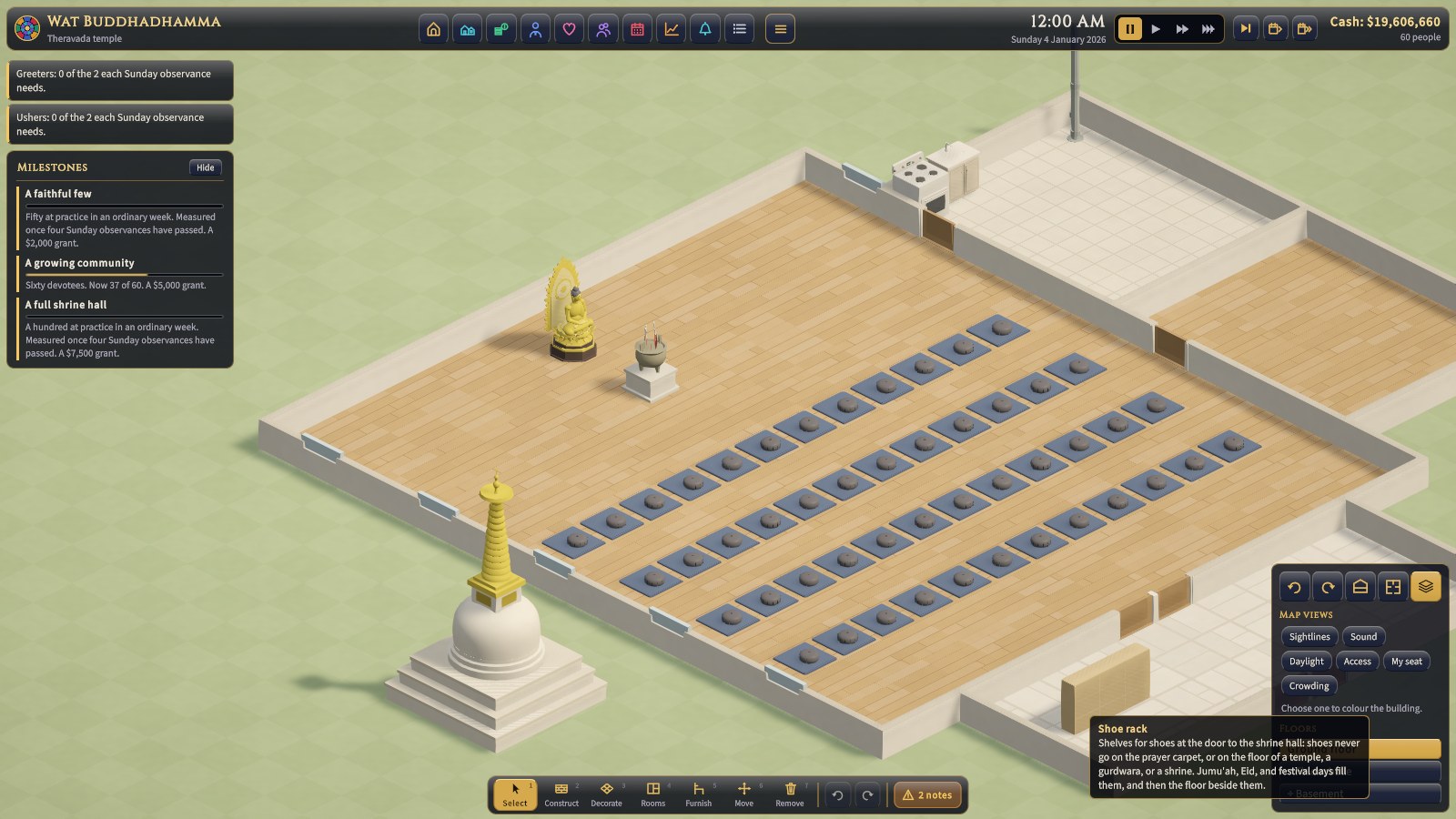
Kept as the Thai temples keep it, with Lao, Cambodian, Sri Lankan, and Burmese variants: a Sunday observance and the dana meal offered to the monks before noon, a weekday meditation evening, and the full moons. Songkran, Vesak, and Kathina are the big days and the big gifts.
- Required: alms bowls, a Buddha image, a kitchen, monks' quarters.
- Expected: an incense burner, a shoe rack.
- Discouraged: pianos, organs, drums.
- Fits best: the mokugyo (+1); a Buddha image, the incense burner, and the shoe rack (+0.5); pews, stained glass, and formal items (+0.33). The pipe organ −0.33, drums and the sound system −0.5, pianos, the electronic and Hammond organs, and handbells −1; chairs and the screen 0.
The monks are unpaid and celibate, and live at the temple; only men are ordained. The abbot leads as a full leader would (caring for 150) and costs no salary. The lay board runs the temple, deciding all its building work after hearing the abbot, and invites the abbot from the sangha council's list. Giving is in boxes and pledges, with no dues, and nothing is owed upward; the council can withdraw a monk's standing. Leaving takes a majority and costs nothing.
Tibetan Buddhist dharma center its page →
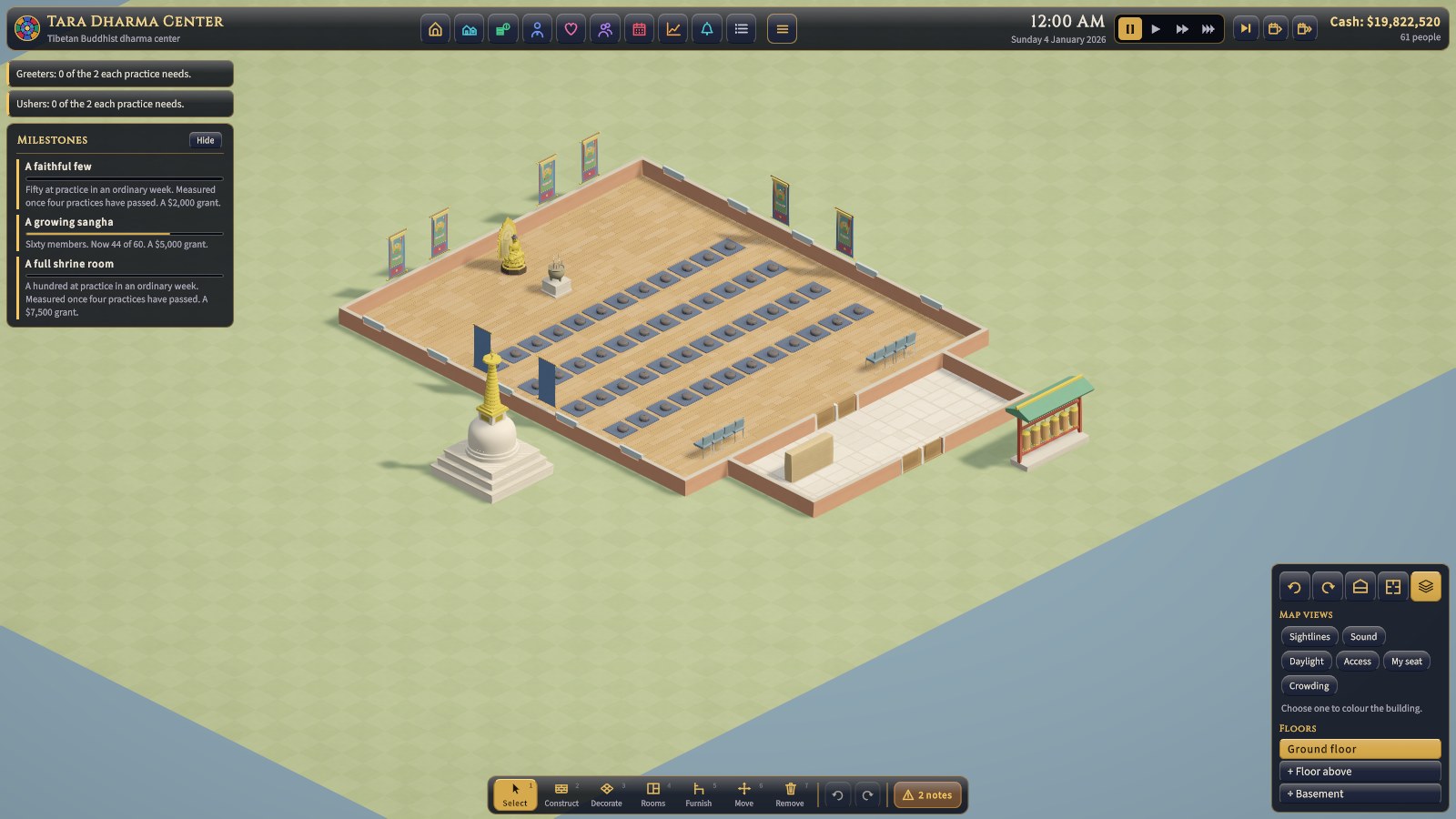
A center of the Gelug lineage (as the FPMT's are): a Sunday practice of meditation, prayers, and teaching, a weeknight class, and the monthly pujas on their lunar days, by the Tibetan calendar. A visiting lama's teachings and empowerments draw the year's biggest crowds.
- Required: a Buddha image.
- Expected: an incense burner, a shoe rack, a Thangka.
- Discouraged: pianos, organs, drums, the national flag.
- Fits best: the mokugyo (+1); a Buddha image, the incense burner, shoe rack, and thangka (+0.5); pews, stained glass, and formal items (+0.33). The pipe organ −0.33, drums and the sound system −0.5, pianos, the electronic and Hammond organs, handbells, and the flag −1; chairs and the screen 0.
A resident teacher (a geshe, a monk) leads, with resident monks or nuns and a visiting lama for empowerments; the board calls the teacher with the FPMT's consent, and the members vote on renovations and new building, the teacher's view swaying them. Dues, dana, course and empowerment fees, and butter lamps pay for it; nothing is owed upward, but the FPMT can expel a center. Women teach, but don't hold the highest office. Leaving takes two thirds and costs nothing.